Why Consistency Beats Quick Fixes in the Science of Staying Young
We all want to age slower, but most anti-aging routines fail—not because they’re bad, but because they’re abandoned. Science shows that regular, consistent habits shape cellular health far more than occasional extremes. I learned this the hard way, chasing flashy solutions before realizing true longevity comes from daily rhythm. This isn’t about perfection—it’s about showing up every day. Let’s explore how routine regularity quietly rewrites your biological story.
The Myth of the Anti-Aging Shortcut
Many people believe that staying young requires dramatic action: extreme juice cleanses, expensive laser treatments, or the latest miracle supplement promoted online. These solutions promise fast results and often deliver short-term excitement—but rarely lasting change. The truth is, the human body does not respond well to sudden, intense shifts in behavior, especially when they are not maintained. While a 10-day detox might make someone feel lighter for a week, it does little to influence the deeper mechanisms of aging if it’s not followed by ongoing, balanced habits. The real driver of longevity is not intensity, but consistency.
Scientific research increasingly supports the idea that long-term health is shaped more by daily patterns than by occasional interventions. For example, a study published in the journal Cell Metabolism found that individuals who maintained regular sleep and eating schedules had better metabolic health—even when consuming the same number of calories as those with irregular routines. This points to a powerful concept: biological consistency. Our cells function best when they can anticipate what comes next. When routines are stable, the body allocates energy efficiently, repairs tissues effectively, and manages stress with greater resilience. In contrast, erratic behaviors force the body into constant adaptation, which over time contributes to cellular wear and tear.
The appeal of quick fixes lies in their promise of transformation without long-term commitment. However, anti-aging is not a destination reached through a single breakthrough, but a process sustained through repetition. The occasional 5-mile run or day of perfect eating does not reprogram aging pathways. What does? The 20-minute walk taken most days, the consistent bedtime, the habit of drinking water upon waking. These small acts, repeated over months and years, signal safety and stability to the body. They allow the internal environment to settle into a rhythm that supports cellular renewal, hormone balance, and immune function. The myth of the shortcut distracts from this truth, making people chase novelty instead of cultivating the quiet discipline of daily care.
What Science Says About Rhythm and Aging
At the core of healthy aging lies a surprising factor: timing. It’s not just what you eat, how you move, or when you sleep—it’s how regularly you do these things. The science of circadian biology reveals that nearly every cell in the body operates on a 24-hour cycle, influenced by light, food, and activity. When these cues come at predictable times, the body’s internal clocks stay synchronized, optimizing functions like DNA repair, metabolism, and inflammation control. But when routines are erratic, these clocks fall out of sync, accelerating biological aging.
One of the most compelling lines of evidence comes from research on telomeres—the protective caps at the ends of chromosomes that shorten with age. A study from the University of California, San Francisco showed that women with more regular sleep patterns had longer telomeres than those with inconsistent sleep, even after controlling for total sleep duration. This suggests that the stability of rest matters as much as the amount. Similarly, irregular eating times have been linked to impaired glucose metabolism and increased fat storage, according to findings in the American Journal of Clinical Nutrition. Even healthy meals lose some of their benefit when consumed at unpredictable hours, because the digestive and metabolic systems work best when they can prepare in advance.
Another key area is mitochondrial health. Mitochondria are the energy factories within cells, and their efficiency declines with age. However, research indicates that regular physical activity—especially when performed at consistent times—helps maintain mitochondrial function by enhancing biogenesis and reducing oxidative stress. The same exercise, if done sporadically, does not produce the same adaptive response. This principle extends to nearly every health behavior: consistency amplifies effectiveness. The body learns to expect movement, nourishment, and rest at certain times, allowing it to allocate resources more efficiently. Over time, this temporal precision becomes a foundation for slower aging and sustained vitality.
Your Body Runs on Predictability
Think of the human body as a finely tuned orchestra. Each system—the nervous, endocrine, digestive, and immune—plays its part in harmony, but only when the conductor keeps steady time. That conductor is routine. When daily habits are predictable, the body can anticipate needs and respond with precision. Wake up at the same time each day, and cortisol rises naturally to help you feel alert. Eat meals at regular intervals, and insulin sensitivity remains optimized. Go to bed at a consistent hour, and melatonin flows at the right time to support deep sleep. This internal coordination is what keeps aging at bay.
When routines break down, so does internal harmony. Skipping breakfast one day, eating late the next, and sleeping in on weekends may seem harmless, but over time, these inconsistencies send confusing signals to the body. For instance, irregular sleep disrupts the cortisol rhythm, leading to higher stress levels and impaired cognitive function. A study in Sleep Medicine Reviews found that people with variable sleep schedules—even if they got enough total sleep—reported more fatigue and brain fog than those with consistent bedtimes. Similarly, erratic meal timing has been shown to reduce insulin sensitivity, increasing the risk of metabolic syndrome over time. The body isn’t designed for constant recalibration; it thrives on repetition.
Detoxification pathways, such as those in the liver, also depend on rhythm. These processes are most active at certain times of day, guided by circadian clocks. When eating and sleeping times shift frequently, the liver struggles to keep up, leading to slower toxin clearance and increased inflammation. Chronic inflammation is a known driver of aging, linked to conditions like arthritis, heart disease, and cognitive decline. By contrast, a stable routine supports the body’s natural cleansing cycles, reducing the burden on vital organs. The message is clear: routine is not about rigidity, but about creating a gentle, reliable structure that allows the body to function with less effort and greater efficiency.
Building a Sustainable Daily Framework
The most effective anti-aging strategy isn’t a complex regimen, but a simple, repeatable daily framework. The goal is not to do everything perfectly, but to establish a few key habits that can be maintained for years. Research in behavioral psychology shows that habits become automatic when they are performed consistently in the same context. This means that the best routines are not the most intense, but the most doable. A 10-minute walk every afternoon is more valuable than an hour-long workout once a week because it builds momentum and reinforces biological rhythm.
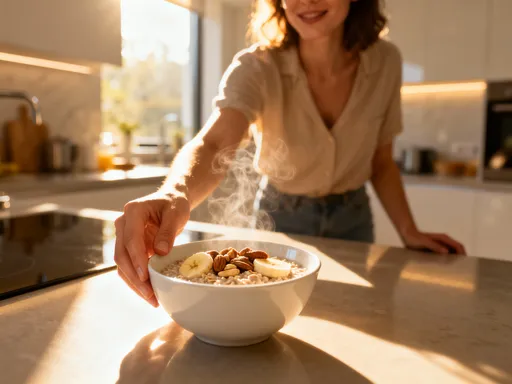
A science-backed daily framework might begin with a consistent wake-up time, even on weekends. This anchors the circadian clock and helps regulate the entire day’s hormone flow. Within 30 minutes of waking, drinking a glass of water supports hydration and jumpstarts metabolism. Morning light exposure—whether from a walk outside or sitting near a window—signals the brain to suppress melatonin and boost alertness, strengthening the sleep-wake cycle. These small actions, when repeated daily, create a cascade of benefits that stabilize energy and mood.
Throughout the day, regular movement breaks are essential. Sitting for long periods has been linked to poor circulation, reduced insulin sensitivity, and increased inflammation. Setting a timer to stand, stretch, or walk for a few minutes every hour can counteract these effects. Eating meals at roughly the same times each day also supports metabolic health, allowing the digestive system to prepare and process food more efficiently. In the evening, a wind-down ritual—such as dimming lights, avoiding screens, and engaging in calming activities like reading or gentle stretching—signals the body that it’s time to rest. Over time, these habits become second nature, requiring little willpower to maintain. The result is a life that naturally supports longevity, not through effort, but through rhythm.
How to Stick With It—Without Burnout
One of the biggest challenges in maintaining healthy habits is not starting them, but sustaining them. Motivation tends to fade, especially when results are slow to appear. This is where systems matter more than willpower. Behavioral science shows that people who maintain long-term change rely on structure, not inspiration. Habit stacking—linking a new behavior to an existing one—is a proven strategy. For example, doing a few minutes of deep breathing after brushing your teeth in the morning makes the practice more likely to stick. Environment design also plays a key role: keeping walking shoes by the door or placing a water bottle on the kitchen counter reduces friction and makes healthy choices easier.
Another important principle is flexible adherence. The goal is not perfection, but persistence. Missing a day does not ruin progress. In fact, research from the European Journal of Social Psychology suggests that it takes an average of 66 days for a behavior to become automatic, and occasional lapses are a normal part of the process. What matters is returning to the routine the next day. People who adopt an all-or-nothing mindset are more likely to give up entirely after a slip. In contrast, those who view consistency as a long-term practice are more resilient in the face of disruptions like travel, illness, or busy schedules.
Tracking progress can also support motivation. This doesn’t require complex apps or measurements. Simply marking a calendar each day that a habit is completed can create a sense of momentum. Seeing a chain of checkmarks builds psychological commitment. The key is to focus on the process, not the outcome. Instead of asking, “Did I lose weight this week?” ask, “Did I walk most days?” or “Did I go to bed on time?” Over time, these small wins accumulate into meaningful change. The science is clear: longevity is not built in a day, but through the quiet, daily act of showing up for yourself.
Measuring What Matters—Beyond Wrinkles
Most people think of anti-aging in terms of appearance: smoother skin, fewer gray hairs, a firmer jawline. But true biological aging happens beneath the surface, and the most meaningful signs of progress are often invisible. Energy levels, sleep quality, mental clarity, and how quickly the body recovers from stress or illness are far better indicators of internal health. These markers reflect the state of your cells, hormones, and immune system—systems that are deeply influenced by daily habits.
For example, someone who has recently adopted a consistent sleep schedule may not look different, but they may notice they wake up feeling refreshed, stay alert during the day, and fall asleep more easily at night. These changes signal improved circadian function and better hormonal balance. Similarly, a person who drinks water regularly and eats at stable times may find their digestion has improved, bloating has decreased, and their mood is more stable. These are signs of reduced inflammation and better metabolic regulation—key factors in slowing aging.
Subjective well-being is a valid and powerful metric. Studies have shown that people who report higher levels of daily energy and emotional resilience tend to have lower biological age, as measured by biomarkers like telomere length and inflammatory markers. This means that how you feel is not just a side effect of health—it’s a direct reflection of it. Encouraging women to tune into their internal experience, rather than focusing solely on external appearance, shifts the conversation from vanity to vitality. The goal is not to look 10 years younger, but to feel 10 years younger—stronger, clearer, and more alive in everyday life.
The Long Game: Aging as a Daily Practice
Aging is not an event that happens to us—it is the sum of thousands of daily choices. Every time you choose to go to bed at a reasonable hour, drink water instead of soda, or take a short walk after dinner, you are casting a vote for the kind of life you want to live. These choices may seem small, but over time, they accumulate into a powerful force. Science now confirms that the most effective anti-aging tool is not a pill or a procedure, but the quiet, consistent practice of self-care.
The beauty of consistency is that it doesn’t require perfection. You don’t need to run marathons or eat perfectly every day. You just need to show up, most of the time, with kindness and intention. The body rewards repetition with resilience. It learns to trust that nourishment, movement, and rest will come regularly, and in response, it invests in long-term maintenance—repairing DNA, clearing waste, and protecting cells. This is the invisible work of longevity, happening silently, day after predictable day.
In a world that glorifies quick fixes and dramatic transformations, choosing consistency is a radical act. It means valuing stability over spectacle, patience over instant results. It means building a life that supports health not through occasional effort, but through daily rhythm. And for women in their 30s, 40s, 50s, and beyond, this approach offers something deeper than youth—it offers vitality, strength, and the quiet confidence that comes from knowing you are caring for yourself, one day at a time. The science is clear: when it comes to staying young, showing up consistently is the most powerful thing you can do.