Damascus Dreams: When Ancient Cityscapes Hide Modern Pitfalls
Stepping into Damascus feels like flipping through the pages of a living history book—stone alleyways whisper stories, minarets pierce golden skies, and souks pulse with timeless energy. But beneath its breathtaking cityscape lies a journey filled with unexpected challenges. From confusing navigation in the winding Old City to subtle cultural missteps, I learned the hard way. This is not a cautionary tale—but an honest look at what really awaits behind the beauty. For travelers seeking depth, Damascus offers unmatched richness, but only if approached with awareness, respect, and preparation. The city rewards those who look beyond postcard moments to uncover its quiet truths.
First Impressions: The Allure of Damascus’ Timeless Cityscape
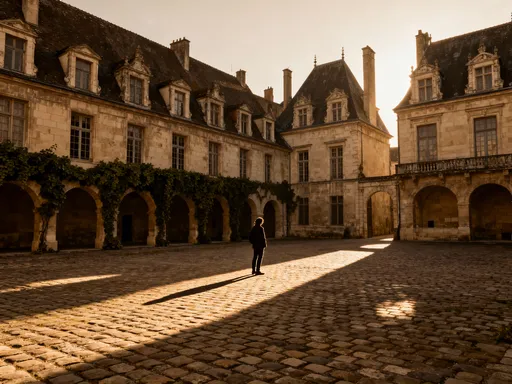
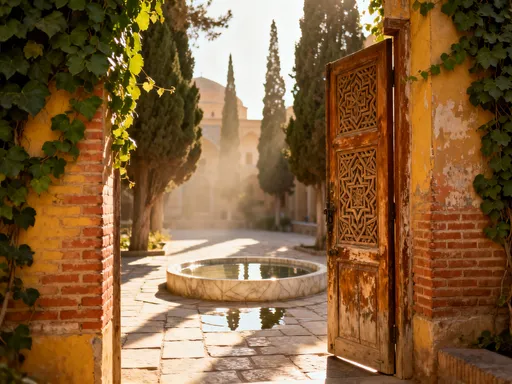
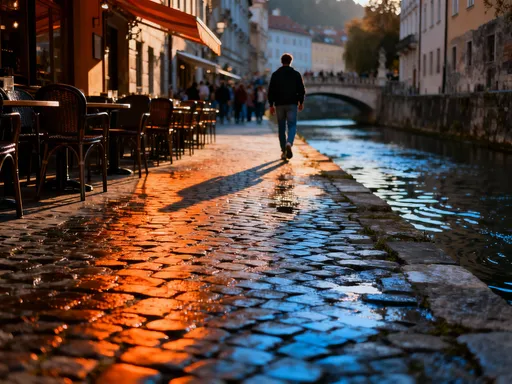
Arriving in Damascus is like stepping into a dream where past and present share the same breath. The city unfolds gradually, revealing layers of civilization in its stone facades, arched doorways, and the soft echo of footsteps on ancient cobblestones. The Umayyad Mosque, with its grand courtyard and towering minarets, stands as a crown jewel of Islamic architecture, drawing visitors not only for its spiritual significance but for its sheer visual power. Around it, the Old City hums with life—vendors call out in melodic Arabic, baskets of spices glow in amber and crimson, and the scent of freshly baked khubz bread drifts from hidden ovens. This is a city that does not shout; it murmurs, invites, and slowly reveals itself.
Yet, even in its beauty, there is a disorienting quality. The contrast between the historic core and the modern outskirts can be jarring. Wide boulevards lined with concrete buildings give way abruptly to narrow alleys that twist without warning. The transition is not always marked, and travelers may find themselves unprepared for the shift in pace and atmosphere. What feels like a cinematic experience at first can quickly become overwhelming. The sensory richness—sounds, smells, colors—can blur into a kind of beautiful chaos. This duality is part of Damascus’s charm, but it also signals the beginning of a deeper journey, one that requires more than just a camera to navigate.
First-time visitors often arrive with romanticized expectations, shaped by centuries of poetry and pilgrimage. Damascus is, after all, one of the oldest continuously inhabited cities in the world, with roots stretching back over 11,000 years. It has been a crossroads of empires, religions, and trade routes. But this legacy is not frozen in time. It lives in the daily rhythms of families, shopkeepers, and students. To truly appreciate the city, one must move beyond the postcard image and begin to see it as a living, breathing urban center—not just a monument to history. The initial awe is natural, even necessary, but it must give way to a more grounded, observant kind of presence.
The Maze Mentality: Getting Lost (Literally and Figuratively)
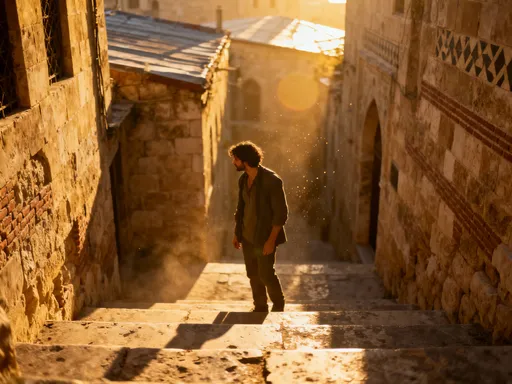
One of the most immediate challenges in Damascus is navigation, particularly within the Old City. The streets are not laid out in grids or labeled with clear signage. Instead, they follow an organic pattern shaped by centuries of growth, repair, and adaptation. What appears on a map as a short walk can become an hour-long journey through alley after alley, each one resembling the last. GPS signals often fail in the narrow passages, where tall stone buildings block satellite reception. Even digital maps, which many travelers rely on, become unreliable. This is not a flaw—it is part of the city’s character—but it can be deeply disorienting for those unaccustomed to such environments.
I remember my first attempt to find a small tea house recommended by a local friend. Confident with my phone in hand, I set off from the Umayyad Mosque, only to realize within minutes that the map had frozen. I turned left, then right, passed a spice stall twice, and eventually found myself in a quiet courtyard where an elderly man was feeding pigeons. He smiled but spoke no English. After what felt like hours—though it was likely only forty minutes—I stumbled upon the tea house, tucked behind a metal gate I would have otherwise missed. Exhausted but oddly satisfied, I realized that getting lost was not a failure, but a kind of initiation.
For many travelers, especially those used to highly organized urban spaces, this lack of structure can be frustrating. The instinct is to resist, to force a sense of order where none exists. But in Damascus, a different mindset is required—one of surrender and curiosity. The city does not reward haste. It rewards patience, observation, and a willingness to engage with uncertainty. Over time, patterns begin to emerge: certain landmarks become anchors, familiar faces appear, and the maze starts to make sense. But this understanding comes slowly, and only to those who are willing to walk without a fixed destination.
Cultural Rhythms: Misreading the Social Landscape
Beyond physical navigation, another challenge lies in understanding the subtle social rhythms of Damascus. Cultural norms here differ in ways that are not always obvious to outsiders. For instance, direct eye contact, while common in Western cultures as a sign of confidence, can be perceived as confrontational or intrusive in certain contexts. Similarly, the pace of interaction—whether in conversation, bargaining, or hospitality—follows a different tempo. Things unfold gradually. Rushing is rarely appreciated. A shopkeeper may offer tea before discussing prices, not as a sales tactic, but as a genuine gesture of welcome. To decline without reason can be seen as impolite.
Photography is another area where good intentions can lead to discomfort. While tourists are often eager to capture the beauty of religious sites, residential areas, or street life, taking photos without permission can cause tension. Some families consider it a violation of privacy. Others may feel objectified, especially if they are photographed during moments of rest or prayer. I once saw a traveler snap a quick photo of an older woman sitting in a doorway, only to be gently but firmly asked to delete it. The woman was not angry—she simply gestured to her face and shook her head. It was a quiet reminder that people are not exhibits.
These moments underscore the importance of observation. Before acting, it helps to pause and watch. How do locals interact? How do they dress? What gestures are common? In Damascus, much is communicated through silence, posture, and small gestures. A nod, a hand over the heart, a slight bow—these carry meaning. By learning to read these cues, travelers can avoid misunderstandings and build more authentic connections. Respect is not always expressed in words; sometimes, it is shown through restraint, through the decision not to take a photo, not to rush, not to assume.
Infrastructure Realities: The Gaps Between Beauty and Convenience
For all its beauty, Damascus operates with infrastructure that reflects both its age and its recent history. Modern conveniences that many travelers take for granted—reliable internet, widespread ATM access, efficient public transportation—are limited. Wi-Fi in hotels may work intermittently. Mobile data can drop without warning. ATMs exist but are not always functional, and credit card use is rare outside high-end hotels. This means that cash—Syrian pounds, and sometimes U.S. dollars or euros—is essential. Travelers who rely heavily on digital tools may find themselves unprepared.
Public transportation is another area where expectations must be adjusted. While buses and shared taxis serve the city, they follow informal routes and schedules. There is no central app to track arrivals, and drivers may not speak English. For short distances, walking is often the best option—but as previously discussed, walking in the Old City requires preparation. Taxis can be hailed, but meters are not always used, so it is wise to agree on a price before departure. These logistical gaps are not signs of backwardness; they reflect a different way of organizing urban life, one that prioritizes human interaction over digital efficiency.
Yet, these challenges can be managed with foresight. Carrying enough cash for several days, downloading offline maps, and saving important contacts in advance can make a significant difference. It also helps to adjust one’s pace. In Damascus, travel is not about efficiency—it is about immersion. When the internet fails, conversations begin. When the map disappears, the senses sharpen. The lack of connectivity, while inconvenient, can become a gift—an invitation to be more present, to engage more deeply with the moment. The city does not cater to the fast-moving tourist. It welcomes the mindful traveler.
Selective Authenticity: Finding Genuine Experiences Beyond Performative Tourism
As tourism slowly returns to Damascus, certain areas have begun to cater to visitors with curated experiences. Cafes in the Old City now offer "traditional" Damascene tea with ornate silver trays, and shops display hand-painted tiles and silk brocade with price tags in euros. While these services are not inherently inauthentic, they often represent a polished version of culture—one designed for consumption. The risk is that travelers may mistake this performance for everyday life, missing the quieter, more genuine moments that unfold just out of sight.
True authenticity in Damascus is found in places that do not advertise themselves. It is in the neighborhood bakery where women queue at dawn for warm flatbread. It is in the public hammam, where families gather for weekly cleansing rituals. It is in the back alleys where children kick a worn football between laundry lines. These spaces are not staged. They are lived. To access them, travelers must move beyond the main souks and tourist paths. They must be willing to wander without a plan, to smile without expecting a response, to accept that not every door will open.
One of the most memorable moments of my visit was an unplanned stop at a small tea stall run by an elderly man named Samir. He did not speak English, and I spoke only a few words of Arabic, but he offered me a glass of mint tea and a seat on a wooden bench. We sat in silence for a while, watching the light change on the stone walls. Then he pointed to a photo on the wall—him, decades younger, standing beside a horse. He laughed, poured more tea, and gestured to the sky. I did not need to understand the words to feel the generosity. This was not a performance. It was a moment of shared humanity. Such experiences cannot be booked or scheduled. They arise from presence, from the willingness to be still.
The Weight of History: When Monuments Speak Louder Than People
Damascus is a city of monuments, and rightly so. The Umayyad Mosque, the Azem Palace, the ancient Roman gate—each tells a story of power, faith, and artistry. But there is a danger in allowing these structures to dominate the narrative. When travelers focus only on the past, they risk overlooking the people who live among these ruins and relics. The city is not a museum. It is a home. Children go to school here. Families cook dinner. Artists create. Businessmen negotiate. Life continues, even amid the weight of history.
Too often, visitors treat Damascus as a destination frozen in time, a place to be observed rather than engaged with. They photograph ancient walls but do not speak to the man repairing them. They admire mosaics but do not ask about the woman selling vegetables nearby. This kind of tourism, while well-intentioned, can feel extractive—taking images and stories without giving anything in return. The deeper reward comes from shifting focus: from the monument to the moment, from the past to the present.
One afternoon, I joined a small group of locals for a walk through the Jewish Quarter, once a thriving community and now a quiet neighborhood with faded Hebrew inscriptions on doorways. Our guide, a history teacher named Leila, did not just recount dates and events. She spoke of her grandmother, who grew up there, of the music, the festivals, the sense of coexistence that once defined the area. Her voice carried both pride and sorrow. This was history not as a textbook entry, but as lived memory. It was a reminder that the city’s soul resides not only in its stones but in its stories—told by those who carry them forward.
Navigating with Respect: A Smarter Way to Experience Damascus
Traveling in Damascus is not about avoiding challenges—it is about embracing them with wisdom and humility. The city does not offer easy answers or seamless experiences. It asks for patience, presence, and a willingness to listen. The pitfalls—getting lost, misreading cultural cues, facing infrastructure gaps—are not signs of failure. They are opportunities to grow, to see more deeply, to connect more meaningfully.
Preparation is key. Carry cash. Download offline maps. Learn a few phrases in Arabic. But more importantly, prepare your mindset. Slow down. Observe before acting. Respect privacy. Ask permission. Smile. These small acts build trust and open doors that no guidebook can unlock. The most rewarding moments in Damascus are rarely planned. They emerge in quiet exchanges, in shared silences, in unexpected invitations.
Damascus is not a destination for the passive tourist. It is for the thoughtful traveler—the one who seeks not just to see, but to understand. The city’s beauty is undeniable, but its true depth lies beneath the surface. It is in the resilience of its people, the continuity of its traditions, the quiet dignity of daily life. To experience Damascus fully is to move beyond the cityscape and into the soul of the city. It is to walk not just through history, but alongside those who live it. In doing so, the journey becomes not just a visit, but a transformation.