You Gotta Taste This: Saint-Louis Dining Secrets No One Tells You
Saint-Louis, Senegal, isn’t just about colonial charm and river sunsets—its food scene is pure magic. I didn’t expect to fall head over heels for thieboudienne eaten on a plastic stool or grilled fish that tasted like the ocean kissed it. From bustling markets to hidden courtyards, every bite tells a story. This isn’t just dining—it’s a sensory journey. Let me show you how to eat like you truly belong, with real tips that go beyond the tourist trail.
Why Saint-Louis Feels Like a Culinary Time Capsule
Saint-Louis, perched on a slender island where the Senegal River meets the Atlantic, has long been a crossroads of cultures, and its cuisine reflects centuries of quiet exchange. As the former capital of French West Africa, the city absorbed colonial influences without losing its Wolof soul. Unlike Dakar, where global trends and fast food are increasingly visible, Saint-Louis moves at a slower rhythm, preserving traditions that shape not just how people cook, but how they gather, share, and savor meals. The food here isn’t rushed—it simmers, it rests, it breathes, much like the city itself.
The legacy of French architecture is mirrored in the subtlety of the cuisine: baguettes still appear at dinner, and onions are caramelized with patience. Yet the heart of every meal beats with local ingredients—freshly caught fish from the river or ocean, millet and rice grown in the fertile north, and spices like ginger, garlic, and Scotch bonnet peppers grown in backyard gardens. These elements come together in dishes that are simple in form but deep in flavor, shaped by generations of women who pass down recipes not in notebooks, but through demonstration, taste, and touch.
What makes Saint-Louis a culinary time capsule is not just what’s on the plate, but the ritual around it. Meals are not consumed alone or on the go. They are events—often shared from a single large bowl, with family or neighbors seated around it. The rhythm of eating follows the sun: late breakfasts, long lunches that stretch into the early afternoon, and evening gatherings that begin with sweet mint tea and end with stories. In a world where convenience often trumps connection, Saint-Louis holds fast to the belief that food is not fuel—it’s fellowship.
This authenticity thrives because the city remains relatively untouched by mass tourism. There are no sprawling resorts or chain restaurants dictating menus. Instead, local pride in food remains strong, and competition among home cooks and maquis chefs keeps standards high. When you eat in Saint-Louis, you’re not tasting a version of Senegalese cuisine made palatable for foreigners—you’re tasting the real thing, unchanged by compromise.
Where the Locals Actually Eat (And Why You Should Too)
If you want to eat like you belong in Saint-Louis, you’ll need to step away from the hotel restaurants and colonial facades of Place Faidherbe. The real magic happens in unassuming places: behind weathered wooden doors, in shaded courtyards, or at plastic tables set up under faded umbrellas. These are the maquis—informal, family-run eateries that serve as the social hubs of the city. They don’t advertise, rarely have menus in English, and often lack signage altogether. But if you follow the scent of grilled fish and onions, you’ll find them.
The atmosphere in a typical maquis is alive with chatter, clattering plates, and the occasional burst of laughter. Tables are shared, drinks are passed hand to hand, and strangers often nod in greeting as they squeeze onto a bench. There’s no pretense, no dress code—just good food, served hot and generous. These spots are where fishermen come after their morning catch, where teachers unwind after school, and where families celebrate small victories. Eating here isn’t just about sustenance; it’s about participation in the daily rhythm of life.
One of the best maquis in the Médina neighborhood, for example, has no name—just a blue awning and a reputation for perfect yassa poulet. Another, tucked behind a mosque near Rue de Gouverneur Général, serves thieboudienne so tender the fish flakes at the touch of a spoon. You won’t find these places on most travel apps, and that’s part of their charm. They exist because they serve the community, not because they cater to Instagram feeds.
Street stalls and home kitchens also play a vital role in the city’s food culture. Many women cook from their homes, selling portions of stew or rice to neighbors and passersby. Some set up small grills near ferry crossings, offering freshly grilled sardinella or capitaine fish with a squeeze of lime. These are not ‘street food’ in the tourist sense—they’re everyday meals, prepared with care and sold at prices that reflect local wages, not foreign expectations. By choosing to eat in these places, you’re not just supporting small businesses—you’re honoring a tradition of generosity and hospitality that defines Senegalese culture.
Must-Try Dishes: Beyond Thieboudienne
Yes, thieboudienne—the national dish of Senegal, made with fish, rice, and a rich tomato-based sauce—is a must-try in Saint-Louis, and often considered some of the best in the country. But to limit your palate to one dish is to miss the depth of this city’s culinary offerings. Each dish tells a different story, rooted in regional ingredients and cultural practices. To truly understand Saint-Louis through food, you must explore beyond the famous.
Yassa poulet is one such revelation. This dish features chicken marinated in a mixture of lemon juice, onions, and mustard, then slow-cooked until tender. The onions caramelize into a tangy, golden sauce that pairs perfectly with white rice. What makes yassa special is its balance—sour, sweet, savory—all achieved without a single artificial ingredient. In Saint-Louis, the best versions are made with free-range chicken, giving the meat a firmer texture and richer flavor. Look for it in maquis where the onions are piled high before cooking, a sign the chef respects the dish’s heart.
Then there’s maffe, a comforting peanut stew that warms the soul. Made with beef or chicken, tomatoes, and a generous amount of ground peanuts or peanut butter, maffe has a creamy, nutty depth that surprises first-time tasters. It’s traditionally served with rice or couscous and often enjoyed during cooler evenings or family gatherings. In Saint-Louis, some cooks add a touch of garden herbs, giving it a fresher profile than versions found elsewhere. It’s a dish that feels like home, even if you’ve never tasted it before.
Soupe kandia, or palm nut soup, is another hidden gem. Made from the red palm nuts that grow in the region, this soup has a deep, earthy flavor and a velvety texture. It’s often cooked with fish or crab and seasoned with chili and garlic. The color alone—rich crimson—is unforgettable. While less common in restaurants, it’s a staple in many homes, especially during the rainy season. If you’re invited to share a meal in someone’s house, this may be what’s simmering on the stove. Accept it with both hands and a smile—it’s a sign of deep respect.
And don’t overlook the simpler pleasures: attiéké, a side dish made from grated cassava, has a texture similar to couscous and a subtle citrus note. It’s often served with grilled fish. Or try bissap, a hibiscus tea served cold and sweetened with sugar or mint. It’s refreshing in the heat and widely available from street vendors. Each of these dishes, whether elaborate or humble, contributes to the mosaic of flavors that define Saint-Louis.
How to Navigate the Markets Like a Pro
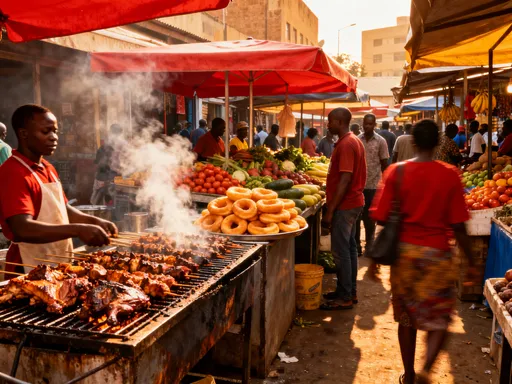
No visit to Saint-Louis is complete without a walk through the Faidherbe Market, a vibrant labyrinth of stalls bursting with color, scent, and sound. Here, the city’s food culture comes alive in the most visceral way. Towering piles of onions, mounds of millet and rice, baskets of okra and eggplant, and strings of dried fish hang from wooden beams. The air hums with the chatter of vendors, the clink of scales, and the sizzle of grills in the ready-to-eat section.
Navigating this sensory overload can be overwhelming, but a few simple strategies make all the difference. First, go early—between 7 and 9 a.m. is ideal. That’s when the fish is freshest, the produce is crisp, and the crowds are manageable. By midday, the heat and congestion can be intense. Bring small bills; many vendors don’t carry change for large notes, and bargaining is easier when you can pay precisely.
Don’t feel pressured to speak perfect French. While it helps, many vendors respond warmly to gestures, pointing, and a friendly smile. If you’re unsure what something is, point and say “C’est quoi?” (What is this?). You might discover a new vegetable or spice you’ve never seen before. And don’t be shy about trying samples—many vendors offer tastes of juice, fried plantains, or small snacks like boulettes, which are savory dumplings made from fish or meat and spices, then deep-fried until golden.
The market isn’t just for shopping—it’s a place to eat. Look for women seated behind large pots, serving portions of stew or rice for a few hundred CFA francs. These are some of the most authentic meals you’ll find. Try the fresh bissap or ginger juice, poured over ice in reused water bottles. It’s cheap, delicious, and hydrating. If you’re feeling adventurous, sample a grilled fish skewer from one of the open grills near the back. Just watch how locals order—imitation is the sincerest form of respect.
Remember, the market is not a performance for tourists. It’s a working space, a place of livelihood. Be mindful of your space, avoid blocking aisles, and always ask before taking photos. A simple “Permisi?” (Permission?) goes a long way. When you treat the market with respect, you’re more likely to be welcomed—not just as a customer, but as a guest.
Timing Your Meals for Maximum Joy
In Saint-Louis, timing is everything when it comes to food. Unlike in cities where restaurants cater to tourist hours, here meals follow a deeply local rhythm. Lunch, the main meal of the day, rarely begins before 1 p.m. and often extends past 3. This isn’t inefficiency—it’s intention. Meals are not rushed. They are moments to pause, connect, and savor. If you try to eat earlier, you may find kitchens closed or dishes not yet prepared.
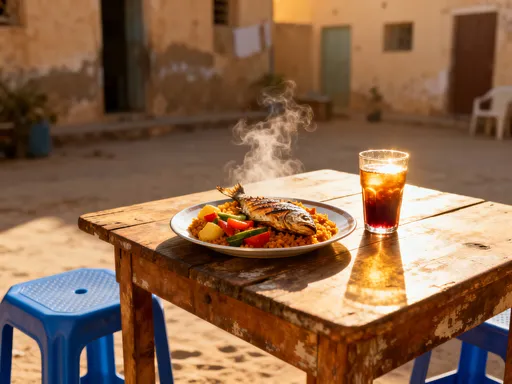
Dinner, too, starts late. Many families eat between 8 and 9 p.m., after evening prayers and tea. Night markets and street grills come alive around this time, especially along the Quai Branly and near the jetty. That’s when the air fills with the smoky aroma of grilling fish, and groups gather on low stools to eat under the stars. This is one of the most magical dining experiences in the city—simple, communal, and utterly authentic.
Breakfast, by contrast, is light and flexible. Many locals start with a café Touba (spiced coffee named after the holy city) or sweet mint tea, often accompanied by a piece of baguette or leftover bread dipped in honey or butter. Some enjoy thieboudienne leftovers reheated with a fried egg on top—a humble but satisfying start. Riverside cafés open early and offer quiet views of the river, making them perfect for a slow morning.
To make the most of your day, plan your meals around these rhythms. Visit the market in the morning for snacks and juices, save your big lunch for mid-afternoon at a trusted maquis, and save dinner for a grilled fish feast by the water. This pacing not only aligns with local customs but also helps prevent the dreaded food coma—because when the food is this rich and flavorful, it’s easy to overindulge.
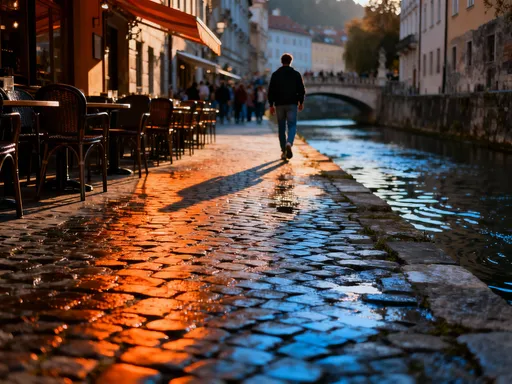
Also, consider spacing out your eating with walks or ferry rides. A stroll across the Faidherbe Bridge after lunch, or a boat trip to Ngor Island, helps digestion and gives you time to appreciate the scenery. Food in Saint-Louis is best enjoyed slowly, with space between bites and moments of stillness in between. It’s not about checking dishes off a list—it’s about savoring the experience.
Simple Rules for Respectful, Delicious Dining
Dining in Saint-Louis is as much about manners as it is about taste. While there’s no formal rulebook, a few unspoken customs can transform your meal from a transaction into a connection. The most important? Eat with your right hand. In Senegalese culture, the left hand is considered unclean, so using the right hand for eating—especially when sharing from a communal bowl—is a sign of respect. If you’re unsure, watch your host or tablemates and follow their lead.
Another key gesture is accepting tea when it’s offered. At the end of a meal, or during a visit, you may be served a small glass of sweet mint tea. This is not just refreshment—it’s a ritual of hospitality. Refusing can be seen as rude, even if you’re full. Sip it slowly, even if it’s hot, and say “Ndoxam” (thank you in Wolof) with a smile. These small acknowledgments build trust and often lead to warmer welcomes, better service, or even an invitation to see how the meal was prepared.
Bargaining, while common in markets, should be done with a smile and a sense of fairness. Haggling aggressively or trying to drive prices down to an unreasonable level will not win you friends. Instead, aim for a fair price—one that respects the vendor’s labor and your own budget. A cheerful attitude and a willingness to engage go further than any discount.
Finally, show appreciation. Compliment the cook, even if it’s just a nod and a “Mmm” of approval. In many cultures, food is love made visible, and acknowledging that effort creates a bond. You might not speak the same language, but gratitude is universal. When you eat with respect, you don’t just taste the food—you become part of the story.
Putting It All Together: A Realistic Day of Eating in Saint-Louis
Imagine this: You wake to the call to prayer echoing across the island, the air already warm but softened by a river breeze. You walk to a small café on Quai Jean Mermoz, where a woman in a bright wrapper hands you a glass of bissap and a warm baguette. You sit by the water, watching pirogues glide past, and dip your bread into honey as the sun rises. This is breakfast in Saint-Louis—simple, peaceful, and deeply satisfying.
By 10 a.m., you’re at Faidherbe Market, weaving through stalls of spices and fish. You stop at a corner where an older woman serves steaming bowls of soupe kandia. You point, smile, and hand over 1,000 CFA. The soup is rich, earthy, and warming—perfect for a slightly cooler morning. You sip it slowly, standing under a tarp, feeling like you’ve been let in on a secret.
After a walk across the bridge and a brief visit to the historic Saint-Louis Cathedral, you’re ready for lunch. You head to a maquis in the Medina, the one with the blue awning. Today, they’re serving thieboudienne with capitaine fish. You sit at a shared table, and the owner brings a large bowl, a spoon, and a side of fried plantains. The rice is tinted red from tomato and fish broth, the vegetables tender, the fish so fresh it tastes of the sea. You eat with your right hand, savoring each bite. A local man next to you offers you a piece of his grilled fish—no words, just kindness.
You spend the afternoon resting under a fan, walking along the beach, or browsing small boutiques. As evening falls, you take a bicycle taxi to the jetty. The grills are already lit, and the scent of sardinella fills the air. You choose a spot near the water, order a whole fish with lemon and chili, and a cold bottled water. A boy brings your order on a metal tray. You eat with your hands, the fish crispy on the outside, moist within. Children play nearby, and someone plays music on a phone. The sky turns deep blue.
Later, you stop at a street vendor for a cup of ginger juice and a small portion of maffe to go. Back at your guesthouse, you sip tea and reflect. This day wasn’t about ticking off attractions—it was about immersion. Each meal connected you to the place, the people, the rhythm of life. You didn’t just eat in Saint-Louis—you lived it.
That’s the real secret of dining here. It’s not just about flavor, though the food is extraordinary. It’s about presence. It’s about slowing down, opening your senses, and letting the city feed not just your body, but your spirit. When you eat like a local, you don’t just taste the cuisine—you become part of its story. And that, more than any dish, is what you’ll carry home.