This Is Why Brisbane’s Art Scene Will Blow Your Mind
You know that feeling when you thought you knew a city, but then it completely surprises you? That was me in Brisbane. I went for the weather, stayed for the soul. Wandering through laneways painted with stories, sipping coffee in galleries that feel like living rooms, and chatting with artists who actually have time to talk—this isn’t rush-hour tourism. This is slow travel at its finest. Brisbane doesn’t shout its culture—it whispers it, beautifully. There’s a quiet rhythm here, one that reveals itself only when you stop trying to see everything and start allowing the city to unfold around you. In a world where travel often means ticking boxes and chasing sunsets for the perfect photo, Brisbane invites something different: presence. And in that stillness, its art scene doesn’t just impress—it transforms.
Arrival Without Rush: Starting the Slow Way
Brisbane greets you not with noise, but with green. The first thing you notice isn’t a skyline or a landmark—it’s the lushness. Trees drape over streets like living canopies, parks unfold beside quiet residential lanes, and the Brisbane River curves through the city like a slow-moving breath. This isn’t a city built for speed. From the moment you step off the train or pull into your rental cottage in West End, there’s an invitation to slow down. That invitation becomes a choice, and for those willing to accept it, the rewards are profound.
Choosing where to stay sets the tone for the entire journey. West End and New Farm, two of Brisbane’s most beloved inner suburbs, offer more than just proximity to attractions—they offer immersion. These neighborhoods aren’t designed for tourists; they’re lived in. You’ll find families at weekend markets, dog walkers pausing at corner cafes, and artists unloading canvases into small gallery spaces. Staying here means stepping into the city’s daily rhythm rather than hovering at its edges. Walkability becomes a form of cultural access. You don’t need a map to find something meaningful—you just need to turn a corner.
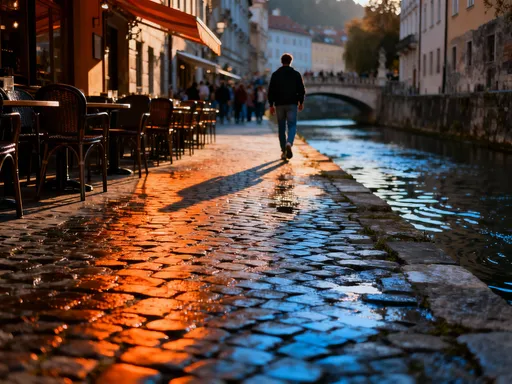
One of the most liberating decisions I made was to abandon the checklist. No racing to South Bank to hit every highlight in a single afternoon. No cramming QAGOMA into a two-hour window between lunch and a ferry ride. Instead, I allowed myself to linger. I sat on a bench near the river and watched the light change on the Story Bridge. I followed the scent of roasting coffee into a tucked-away café and stayed for an hour. By refusing to treat the city like a museum to be toured, I opened space for real connection. And in that space, Brisbane began to reveal its soul—one quiet moment at a time.
Street Art That Speaks: Following the Laneway Stories
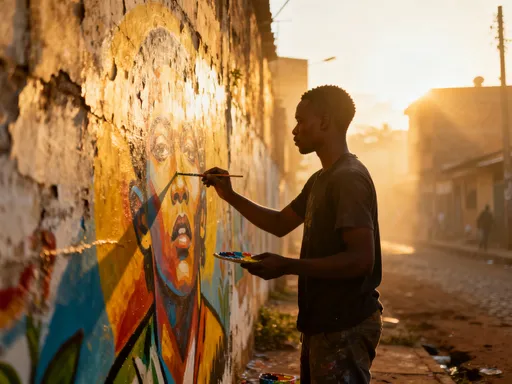
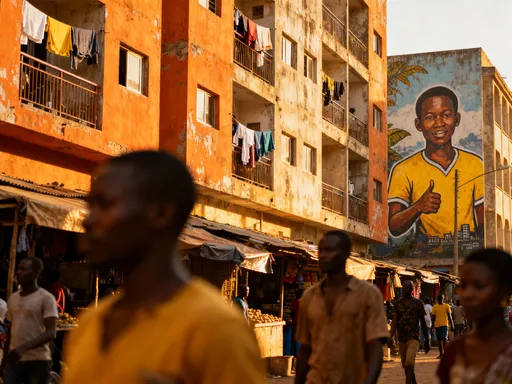
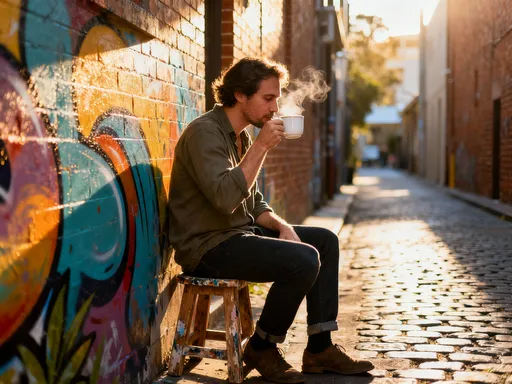
If you think street art is just bold colors on brick walls, Brisbane will change your mind. Here, murals aren’t decoration—they’re dialogue. In neighborhoods like Fortitude Valley and Woolloongabba, every painted surface carries intention. Some pieces honor Indigenous heritage, others respond to social change, and many reflect the personal journeys of the artists who created them. This isn’t art made for Instagram—it’s art made for the community, by the community.
One morning, I wandered into a laneway off Brunswick Street, camera in hand, ready to snap a few photos. But what stopped me wasn’t the size or color of a mural—it was a small detail tucked into the corner: a child’s handprint, preserved beneath a layer of varnish. A man walking his dog noticed me staring and paused. He turned out to be the artist, and he told me the story: the handprint belonged to his daughter, painted during the final days of a project that took three months to complete. The mural, he explained, was about memory—how the past lives in small, unexpected traces. That conversation lasted only ten minutes, but it changed how I saw everything around me.
Walking slowly through these neighborhoods allows you to catch what others miss. You notice how some murals evolve over time, with new layers added by different artists. You see symbols repeated across walls—a bird, a wave, a particular pattern—that suggest quiet conversations between creators. You begin to understand that street art here isn’t random; it’s a living archive. And the more time you spend in these spaces, the more you feel included in that story. It’s not about taking a photo to prove you were there. It’s about standing in front of a wall and realizing you’re part of a larger narrative.
Galleries with Soul: From QAGOMA to Tiny Pop-Ups
No discussion of Brisbane’s art scene is complete without QAGOMA—the Queensland Art Gallery and Gallery of Modern Art. But the true magic isn’t in rushing through its expansive halls. It’s in choosing to go deep, not wide. On my first visit, I made a rule: I wouldn’t try to see everything. Instead, I dedicated my morning to one exhibit—Indigenous Australian art from the Torres Strait Islands. The result was not just observation, but absorption.
The exhibit featured intricate weavings, ceremonial masks, and contemporary paintings that bridged ancestral stories with modern expression. What struck me most was the sense of continuity—how art here isn’t separated from life, but woven into it. A woven turtle basket wasn’t labeled simply as craft; it was presented as knowledge, as identity, as survival. The lighting was soft, the space quiet, and the curation thoughtful. I found myself standing in front of a single piece for nearly twenty minutes, not because I was analyzing technique, but because I was feeling something. That kind of emotional resonance doesn’t come from speed. It comes from stillness.
But Brisbane’s art world doesn’t live only in institutions. Some of the most memorable moments happened in places you’d miss if you weren’t looking. In Paddington, I stumbled upon a cluster of converted warehouses housing small, artist-run galleries. One space, no larger than a living room, displayed linocut prints by a local woman who also ran the café next door. She wasn’t behind a desk or wearing a name tag—she was sitting on the floor, chatting with a visitor. There were no ropes, no rules, just art and conversation. These pop-ups and micro-galleries thrive because of slow travel. They depend on people who take the time to wander, to knock on a half-open door, to say hello.
Culture in the Everyday: Markets, Music, and Morning Routines
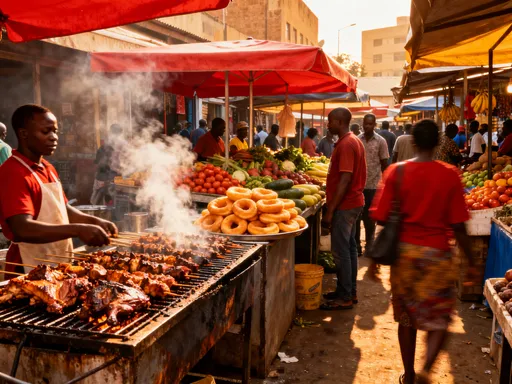
In Brisbane, culture isn’t confined to galleries or performance halls. It spills into the ordinary. One of my favorite rituals became visiting the Jan Powers Farmers Market on weekends. Yes, the food was exceptional—organic greens, handmade cheeses, sourdough with perfect crusts—but that wasn’t the main draw. It was the atmosphere. A folk trio played in the corner, their melodies drifting over baskets of ripe tomatoes. A sketch artist sat on a folding stool, capturing the scene in quick, confident lines. Vendors greeted regulars by name. This wasn’t a market designed for tourists; it was a weekly gathering point for the community.
And that’s where Brisbane’s cultural heartbeat truly lives—in the repetition, the routine, the small moments of connection. Outdoor cafes double as informal performance spaces. In New Farm, I sat at a riverside table one evening and watched as a poet took the corner spot after dinner service ended. No microphone, no spotlight—just ten minutes of spoken word that drew a small, respectful crowd. The next day, an acoustic guitarist played covers while people sipped flat whites and read novels. These weren’t scheduled events advertised online. They were organic, unscripted moments that only happen when a city values expression as part of daily life.
My own routine began to mirror the locals’. I returned to the same café for three mornings in a row, ordering the same flat white. On the fourth day, the barista smiled and said, “The usual?” That tiny moment of recognition—of being seen—meant more than any landmark I’d visited. It was proof that I wasn’t just passing through. I was becoming part of the fabric, even if only for a short while. And that, perhaps, is the deepest form of cultural exchange: not observing, but belonging.
River as a Cultural Thread: Life Along the Brisbane Waterway
The Brisbane River isn’t just a geographic feature—it’s a cultural spine. It connects neighborhoods, inspires artists, and serves as a gathering place for residents. Walking the South Bank pathways slowly, you begin to notice how creativity clusters along its banks. Public sculptures appear unexpectedly—a bronze figure mid-stride, a spiral of steel that catches the wind. Dance groups rehearse on open lawns, their movements synchronized with the rhythm of the water. Readers lounge under trees with books open, undisturbed by the city’s hum.
One of the best ways to experience this is by taking the CityCat ferry—not as a means of transport, but as a moving viewpoint. I boarded one afternoon with no destination in mind, planning to get off when something caught my eye. As the ferry glided past Kangaroo Point, I watched climbers scale the cliffs, their silhouettes sharp against the sky. Further on, near the Cultural Centre, I saw a group of students sketching the architecture from the deck. The river, in that moment, felt like a shared studio—a space where art, recreation, and daily life flow together.
It’s also impossible to ignore the river’s deep connection to Indigenous history. The Turrbal and Jagera peoples have lived along its banks for thousands of years. Today, public art installations honor that legacy. One piece near the Goodwill Bridge features engraved stones with words in the local language, telling stories of creation and connection to Country. Another, a series of illuminated poles at night, mimics the flight path of native birds. These works don’t just decorate the space—they educate, remind, and respect. To walk along the river is to move through layers of time, where past and present coexist in quiet dialogue.
Meet the Makers: When Conversations Become the Souvenir
Some of the most meaningful souvenirs aren’t things you can pack in a suitcase. In Teneriffe, I joined a small ceramics workshop hosted in a converted warehouse. The group was tiny—just six of us—and the instructor, a local potter named Elise, emphasized process over perfection. We worked with messy clay, laughing at our lopsided bowls, sharing stories as our hands shaped the material. By the end, I had a mug that leaned slightly to the left. But more than that, I had a connection. Elise invited us to her studio the following week to see her finished pieces. One woman from the class brought homemade biscuits. It felt less like a workshop and more like a gathering of friends.
This kind of intimacy is rare in traditional tourism. Big group tours move too quickly for real conversation. But when you slow down, doors open. I began seeking out small studio visits—arranging them through local arts networks or simply asking gallery owners for recommendations. In one case, a printmaker handed me a handmade zine at the end of our chat, saying, “It’s not for sale—just for people who really listen.” Another time, I was invited to dinner at a painter’s home after spending an hour discussing her use of color. These weren’t transactions. They were exchanges of trust, curiosity, and mutual respect.
What made these moments possible was time. Time to ask questions. Time to sit in silence while someone explained their process. Time to return to the same neighborhood, to be recognized, to be welcomed. In a city like Brisbane, where the art scene thrives on authenticity and connection, rushing means missing the heart of the experience. The souvenirs aren’t in shops—they’re in conversations, in shared meals, in the quiet understanding that you’ve been let in.
Why Slow Travel Isn’t Lazy—It’s Deeper
Looking back, I realize that the places I didn’t visit were just as important as the ones I did. I never made it to the top of Mount Coot-tha for the panoramic view. I skipped the museum audio guide. I left half the city unexplored. And yet, I’ve never felt more connected to a destination. That’s because slow travel isn’t about seeing more—it’s about feeling more. It’s about trading breadth for depth, performance for presence.
I used to measure trips by how much I’d accomplished. Could I list ten attractions? Did I get the perfect photo? Was my itinerary optimized? But in Brisbane, I learned to measure differently. I asked: Did I have a real conversation? Did something make me pause? Did I leave space for surprise? The answers were yes, yes, and yes. And in that space, the city revealed itself not as a collection of sights, but as a living, breathing culture.
Slow travel isn’t passive. It’s not laziness disguised as relaxation. It’s an active choice to engage differently—with places, with people, with yourself. It asks you to be patient, to be open, to be willing to sit with discomfort when a piece of art challenges you or a conversation takes an unexpected turn. But in return, it offers something rare: authenticity. In Brisbane, I didn’t consume culture. I lived it. I walked its lanes, sipped its coffee, shared its tables. And in doing so, I didn’t just understand the city better—I understood what travel could be.
So if you go to Brisbane, don’t rush. Let the green streets calm you. Let the river guide you. Let the art speak, even when it whispers. Give the city time to reveal itself, not as a performance, but as it truly is. Because culture isn’t something you check off a list. It’s something you step into. And once you do, you’ll find it stays with you long after you’ve left.